
ALUMINUM
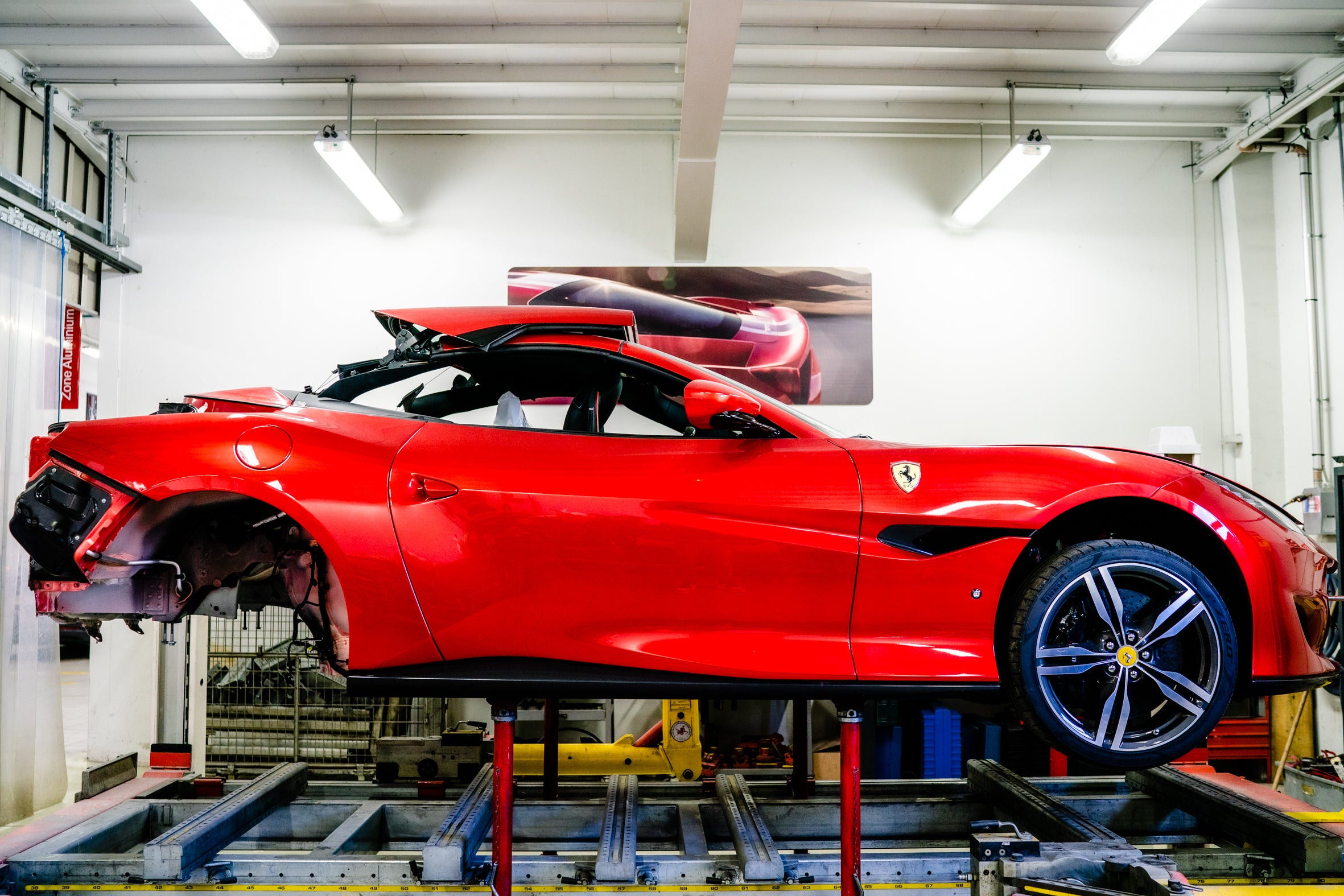
Lecoq Bodywork is renowned for its high-quality restorations and the repair of prestige vehicles. But Lecoq also has its specialties that have made its name. Above all, Lecoq is an expert in working with aluminum.
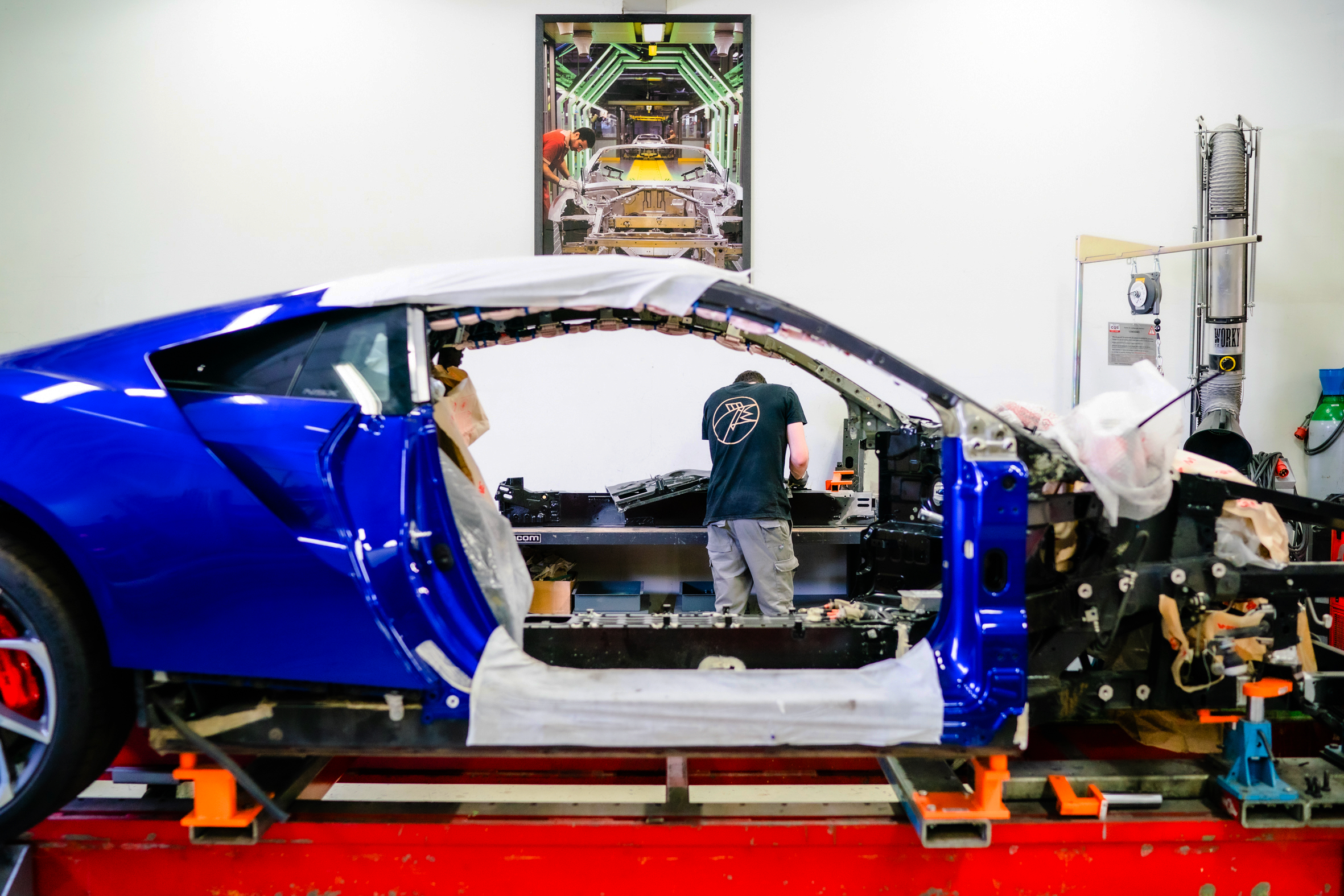
More and more supercars have an aluminum structure, whether it's Ferrari, Tesla, Lamborghini or even Jaguar...
But aluminum is also found on classic cars and requires a particular expertise and meticulousness that steel does not require. Whether for customization, repair or restoration of classics on aluminum vehicles, the work must be specific to it.
Indeed, aluminum is a much more fragile material than steel and therefore much thinner to work. To properly understand working with aluminum, you must know its properties:
- Aluminum has a much greater risk of work hardening than steel. Indeed, when straightening an aluminum support cold, it quickly tends to crack.
- Aluminum stretches more than steel, which poses a problem during straightening operations.
- The material is soft and therefore easily marked by tools, especially when they are sharp. It is very elastic. This is an advantage when it hails, for example. But it is a disadvantage when trying to straighten it. Indeed, the hammer will bounce. It is therefore necessary to strike harder while taking care of its elasticity so that it does not stretch.
- Working with aluminum requires particular vigilance when it is heated. Indeed, it does not glow red like steel. It is therefore more difficult to control the temperature and work it at the right heat.
The properties of aluminum explain the delicacy of working with it and result in a clean environment, especially when welding.
Aluminum work on vintage cars was often done on body panels such as the hood, tailgate, door panels, or even front fenders. Aluminum was used to lighten the vehicle in order to improve the performance of the low-powered engines of the time.
Aluminum is found mainly on vintage race cars. It is therefore a formwork craft. Today in restoration, formwork is equivalent to rebuilding the exterior parts of the automobile. Aluminum work takes us into the world of vintage cars through the fabrication of new body panels, but also into modern cars for customizations, the creation of parts, as well as repairs.
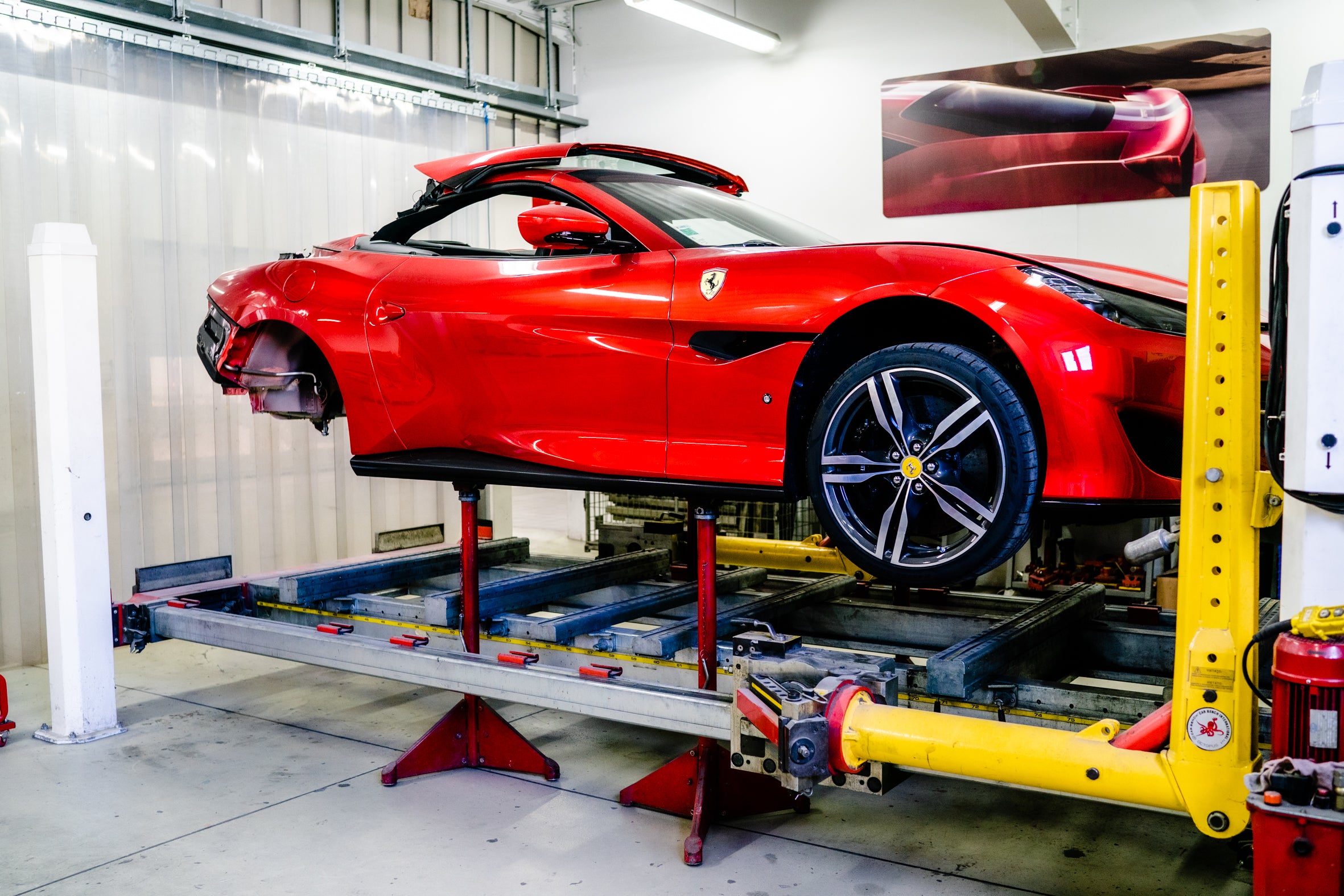
However, modern cars are no exception. Today, many supercars are made of aluminum. The goal is the same as with older cars: to lighten the vehicle while also making the chassis stiffer to handle more power. Aluminum is used in three forms in modern cars: stamped aluminum, tubular aluminum, and cast aluminum. Thanks to technological advancements, aluminum can be worked in three different ways.
- The first method of working with aluminium is riveting.
Almost all brands on the market use it. There are two types of rivets: structural pop rivets and self-piercing rivets.
- The second method of working with aluminium is bonding. It can be used for both body panels and skin, as well as structural elements such as longerons and even the passenger cell. Most of the time, bonding is combined with riveting and/or sometimes welding.
- The third method is welding. However, when working with aluminium, it is not done using the same gas as steel welding. Furthermore, aluminium welding is carried out at a much lower temperature than steel welding.
Working with aluminium requires specific equipment and highly specialised expertise. At Lecoq, an exclusively aluminium area has been set up, and the body shop has been approved by Ferrari, Jaguar, Land Rover, and Range Rover since 2012. Likewise, all technicians working on aluminium supercars have undergone brand-specific training for each make.
MULTI-MATERIAL
Beyond our recognized expertise in working with aluminum, we are proud to highlight our specialization in repairing cars made of multi-material components.
Modern vehicles increasingly incorporate sophisticated composite materials such as carbon fiber, steel, and many others. At Lecoq, we understand the critical importance of mastering the repair of these materials to ensure the safety, performance, and aesthetics of your car.
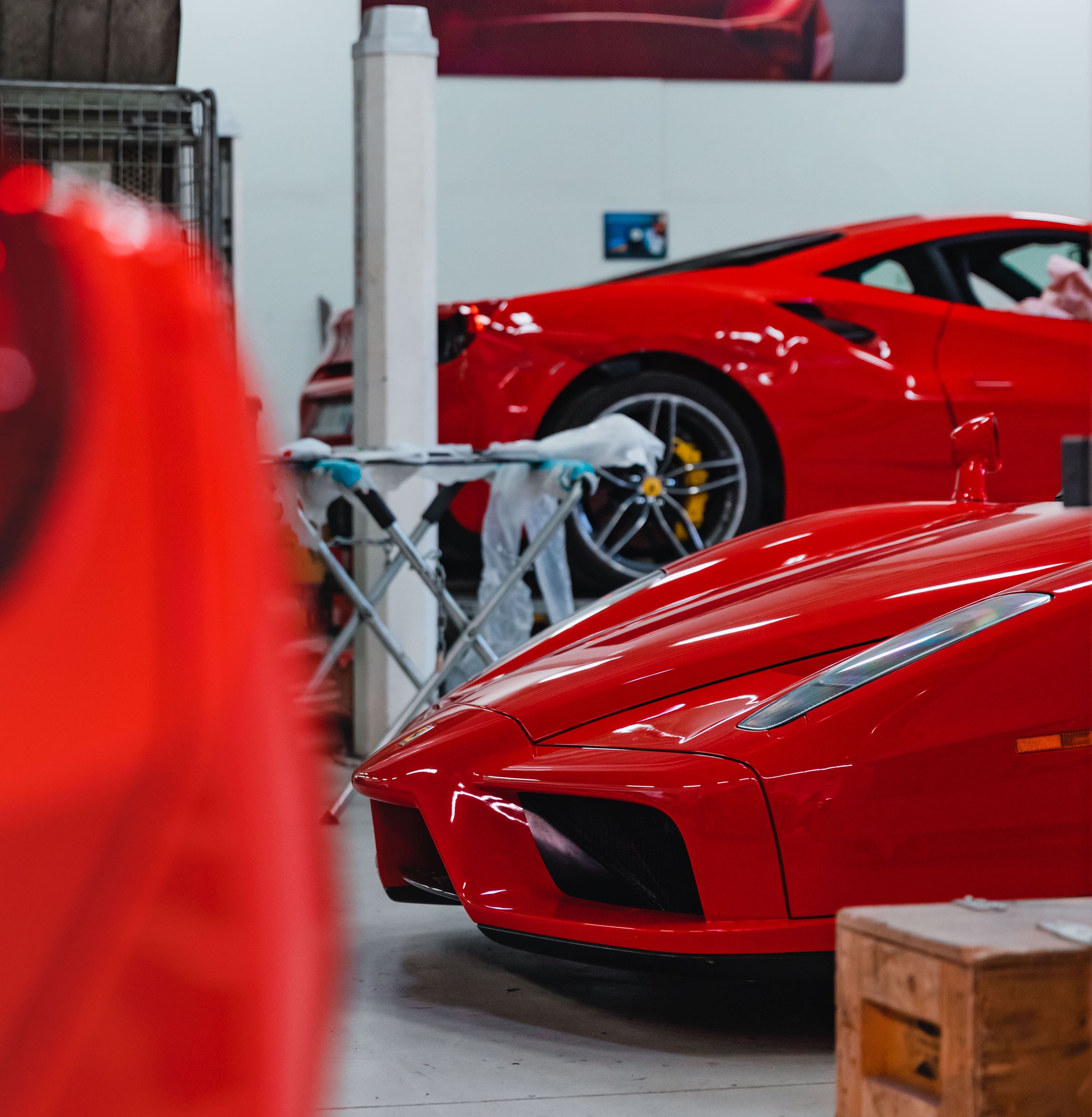
Our highly skilled teams are dedicated to perfecting every repair. Each of our technicians is trained to work with precision, ensuring your vehicle is fully restored whether following a collision, impact, or structural damage.
Multi-material repair process:
- Advanced diagnostics: Our experts perform a precise diagnostic assessment to evaluate the damage, examining every material present in your vehicle.
- Specialized techniques: We use advanced repair methods tailored to each material, ensuring a durable and aesthetically flawless restoration.
- State-of-the-art equipment: Carrosserie Lecoq invests in specialized equipment, such as multi-material welding tools, ensuring optimal precision at every stage of the repair.
- Rigorous quality control: Every repair undergoes strict quality control to ensure optimal performance and maximum safety.
By choosing Carrosserie Lecoq, you are opting for unparalleled technical expertise, coupled with our commitment to customer satisfaction. Our reputation for excellence is a guarantee that we will exceed your expectations at every step of the repair process.